Blog
Soil microbes release free fertilizer which soil labs are ignoring in fertilizer rates.
Sunday, February 12th, 2012
 Soil microbes number up to 10-million per gram soil, and release free fertilizer for plants.
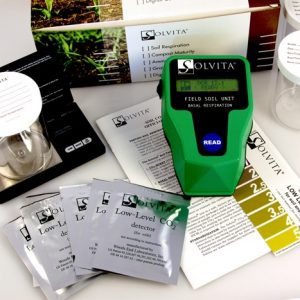
According to Will Brinton, soil labs may be reluctant to adopt soil biology tests due to complicated outdated (and costly) methods. “It’s too bad since this is impeding the country getting on with much needed soil quality assessment”. One older method, still sometimes used, measures microbial biomass by an indirect process called fumigation-incubation (FI). FI is complicated and requires use of toxic chloroform first to kill soil microbes, then inoculation, then a 10-day incubation for microbes to re-establish themselves, then a period of capture of CO2. “Talk about a convoluted, costly way to measure the microbial traits of a soil”. Will Brinton has worked with soil respiration since the late 1970′s and developed the breakthrough Solvita test, which allows soil microbial activity to be rapidly measured within 24hrs. Microbes are important since their activity releases free fertilizer that labs are not accounting for in their fertilizer recommendations.
PARTNERSHIP: The new soil Solvita CO2-burst protocol is a unique collaboration of Government and Private Lab: Woods End Laboratories and Dr. Haney’s USDA-ARS soil lab in Temple, TX, both centers that had been pursuing soil quality for the last 20 years. The new procotol puts the measurement of soil mirobial activity into the realm of the practical and is extremely cost-effective from a ceommercial soil lab perspective. The simple method combines a pre-calibrated CO2-trap and a soil drying-and rewetting step which simulates the natural potential to spring into activity, following a severe evnt (but not as severe as killing with chlorofrm). Recent published research shows that 24h CO2-burst corresponds closely to bacterial biomass results, so it should be no problem to move forward with the new system. The thrust of the new work however is focused on nutrients releaed by microbes:
WHY TEST SOIL MICROBES: The quantity of active soil microbes – fungi and bacteria- can be represented by actual living carbon associated with “respiring (live) cells producing CO2 within a soil systems” – from Dr Haney and Brinton. This living microbial consortia is associated with many positive properties such as transforming chemicals, aiding pesticide degradation, facilitating the release of nitrogen from organic matter and contributing to soil aggregation. The latter property alone may account for more than 50% of soils ability to resist erosion.
ACTIVE not STATIC CARBON: Measuring microbial activity is not the same as determining total organic matter (SOM) or total-C, both determined by combustion. “Those show the quantity but not the quality” of the soil carbon. Woods End hopes that by making testing more streamlined and accessible, agronomists, farmers and soil scientists will be able to routinely include biological measures in explaining soil fertility.
|
Solvita featured at the Fifth Annual Conference on Sustainable Growing Practice hosted by Texas Plant & Soil Lab
Thursday, February 2nd, 2012
As growers’ needs change, the pressure builds to improve agricultural standards. An imperative call to action to accurately assess application rates of fertilizers to our soils is upon us. In this workshop hosted by Texas Plant and Soil Laboratory, Andrew R. Sparda of Woods End Laboratories will discuss Solvita, a tool for direct biological assessment of soils developed with a decade of research from Woods End and the USDA-ARS. This workshop will teach the value in soil respiration, best management practices to avoid over-fertilization and grain spoilage, utilization of mature compost, pathogen testing, and how to take into account to exactly what our soils need to reach peak fertility.
Solvita Respiration Systems: Innovative and Robust Tools for the Future of Agriculture
Presenter: Andrew R. Sparda
Day: Wednesday February 8, 2012
Location: Casa De Palmas Renaissance Hotel McAllen, Texas
Session time: 2:30pm – 3:30pm (Soil Science Session)
|
Solvita Workshop at the Northeast Organic Farming Association of Vermont’s 30th Annual Winter Conference
Monday, January 30th, 2012
As the environment applies pressure to agricultural standards there is a dire need to accurately assess application rates of fertilizers to our soils. In this workshop hosted by NOFA Vermont, Andrew R. Sparda of Woods End Laboratories will discuss Solvita, a tool for direct biological assessment of soils developed with a decade of research from Woods End and the USDA-ARS. This workshop will teach the value in soil respiration, best management practices to avoid over-fertilization, utilizing mature compost, pathogen testing, and how to take account of mother nature’s economy to determine exactly what our soils need to flourish.
Solvita Respiration Systems by Woods End Laboratories: A Holistic Approach and a Renewed Focus on Soil Biology
Presenter: Andrew R. Sparda
Day: Saturday, February 11, 2012
Location: University of Vermont, Burlington
Session time: 10:45am – 12:00pm (Workshop Session I)
|
CTS Accepts Solvita Soil Test in Agricultural Lab Proficiency ALP Program
Thursday, September 15th, 2011
 Dr. Miller (ALP) sampling soils (Tully, NY).
CTS’s Agricultural Laboratory Proficiency (ALP) Program has as of June 2011 added the Solvita Soil Test to its proficiency process. The new CO2-Burst Method met the necessary prerequisite that at least 12 commercial USA soil labs be employing it (there are 15). Solvita is seen as filling a gap for commercial lab tests which have not included biological assessment since such methods are generally cumbersome and not cost-effective.
Since 2007, Dr. Robert Miller has served as Technical Director of ALP, working with Collaborative Testing Services (CTS) to refine the overall program which has grown in scope and participation, and now extends beyond any previous soil testing programs. There are presently 70 labs in the program (including Woods End). Bob Miller’s noted expertise in agricultural testing supports the scope of this program which allows laboratories to audit a large portion of their activities on an ongoing basis – critical to dealing with the changing dynamics of staffing, equipment maintenance and training. Among Dr. Miller’s activities are the preparation of test samples, assisting with interpretation of the collected data and providing summary reports to member labs.
The Solvita CO2-burst method complements other soil procedures, and comes at a time of heightened interest in soil sustainability practices which may reduce excessive nitrogen and phosphorus inputs, helping alleviate costs and burdens to the environment. The test works to measure the soil’s inherent biological status and hence its nutrient potential. Solvita Customer Relations Director Andrew Sparda has collaborated with Dr. Miller at several soil meetings and describes interest in the new test as “keen and very positive”. “Time will tell how labs get on with the new procedure and just how the farmers will react to a test that potentially saves them fertilizer costs – without sacrificing yields”. Dr. Brinton, the inventor of the procedure, says “the Solvita Soil Method is as robust and as simple a biological test as we can imagine right now. We are very open to seeing how this pans out and in providing any necessary technical support to conversion labs”.
|
Monmouth Soil Plots: Test Composts for Solvita, PSNT, 7d-NMin for Corn Yields into 2nd year
Saturday, September 3rd, 2011

What’s the inherent yield potential of soil? How long does it take compost to alter it? A collaboration of the Highmoor Agricultural Experiment Station and Woods End Labs utilizes two types of compost (leaves, biosolids) at 3 rates and compares soil and plant tests designed to predict nitrogen sufficiency: Solvita-CO2-burst, PSNT, 7d-Nmin, Chlorophyll and stalk-nitrate. The project is now in its 2nd year with sweet corn.
By year 2, 7day-min and Solvita CO2-Burst results closely compare. In the first year, all tests except chlorophyll reflected yield of corn. PSNT accurately reflected nitrogen sufficiency in the first year. Yields also reflected past management that affected the soil: one block with plowdown sod strip showed by Solvita and 7d-Nmin the capabiliy to contribute twice the N-mineralization as other plots, virtually overiding compost effects. Biosoldis-compost yielded more in Yr-1 but leaf-compost N-efficiency was greater.
The project is directed by Mark Hutchinson UME-Extension and may go into is 3rd year. Reports will be presented at seminars and Tri-Society (SSSA-CSA-ASA) meetings in 2012.
|
Rumford Gardener, Rhode Island, to partner Solvita GardenCare
Tuesday, August 30th, 2011

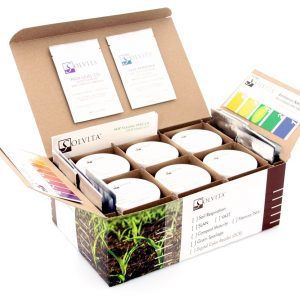
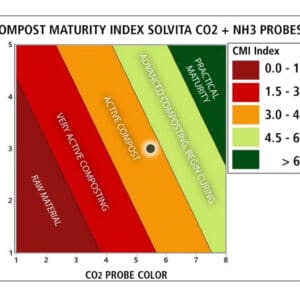
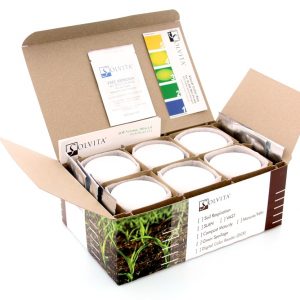
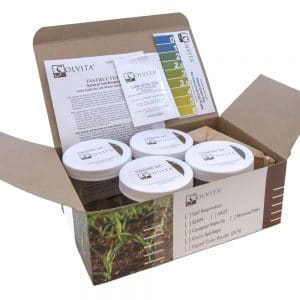
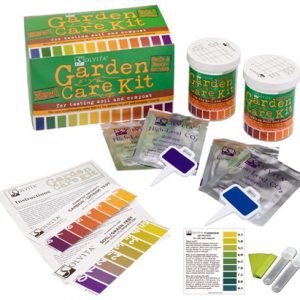
Solvita.com is entering into a distribution partnership with The Rumford Gardener, Rumford Rhode Island. Rumford will carry the GardenCare kit, a consumer oriented version of the professional CO2 test. The GardenCare Kit includes two probes, one for compost and one for soil. The compost probe measures compost maturity and the Soil probe shows level of biological activity in the soil. The combined result shows the quality of the organic matter and potentially mineralizable nitrogen in the soil. Specific recommendations are given for addition of compost in order to bring your soil to peak fertility.
The Rumford Gardener is a North American manufacturer and wholesaler of fine garden tools and lifestyle accessories. Their products include various hand digging tools, cutting tools, watering devices and accessories designed to enhance gardening experience. The Solvita GardenCare kit adds to Rumford’s latest commitment to sustainability and green gardening in a line of EcoLogic Earth-friendly pots made from renewable grain crops and natural binding agents.
The Solvita distributor partnership with Rumford Gardener will bring Solvita technology to the gardening masses by way of Rumford’s E-Commerce and marketing channels.
|
Respiration of High OM Soils- not as efficient as expected?
Friday, August 26th, 2011
Many soil labs are adding the Solvita test to their repertoire as a means to reveal soil biological activity and N-mineralization potential. The test was originally designed for soils with medium to low organic matter, as is (unfortunately) now the case with most farmed soils in America. What about soil respiration for high OM soils? Will the range that Solvita is calibrated for work? Collaborative research between Woods End Labs, USDA-ARS (Texas) and University of Maine Soil Lab (Orono, ME) evaluated this. Orono randomly selected 48 archived soils from gardens, turf and pastures that had over 5% OM – some as high as 19%. Two soil labs split the samples and ran the regular soil Solvita (lo-CO2 detectors) and Solvita high-CO2 probes, the latter normally used for composts since the CO2 rate of compost can be 5-20 times higher than soil.
The results showed that CO2 respiration does not appear to increase proportional to the tested OM level, but tends to level off. This indicates that the lo-CO2 probes normally used for soils are not underestimating respiration for high OM soils. The researchers also correlated the soil tests with the standard 7-day anaerobic N-mineralization test. The ratio of release of N to CO2 respiration of ppm, as measured by Solvita, was only slightly greater than the ratio seen with soils that are less than 5% OM. This suggests that high OM soils are less efficient in supplying organic N from stored OM, than are low OM soils. One explanation is that high OM soils may have accumulated crude or non-microbial organic matter (not humified) and therefore do not contribute to the soil nitrogen cycle.
|
Solvita test technology available to commercial labs
Tuesday, August 23rd, 2011
 Solvita and TPSL Reps meet with Dr Zibilske in the Sub-Tropical Research Center, Weslaco TX
Andrew R. Sparda, Director, Solvita Sales and Customer Relations recently visited Texas Plant and Soil Lab in order to introduce our new diagnostic testing technology which is available for commercial laboratories. The strategic partnership with Texas Plant & Soil Lab resulted in the launch of the innovative Solvita lab methods: Soil Health & Activity, Compost Maturity & Stability, Manure Ammonia Volatility and Grain & Seed Fungal Susceptibility and Spoilage.
Working with TPSL owner Frank A. Schultz III while in Texas, Andrew was also able to participate in the monthly Sustainable Agriculture meeting where the film “Fresh: New Thinking About What We’re Eating” was screened by Dr. Fidel del Barrio to a group of local growers and soil industry folks. Dr. Larry Zibilske (USDA-ARS and formerly of University of Maine, Orono) introduced Andrew to the group and emphasized his willingness to meet with local growers. The group was very receptive to Solvita now being offered at Texas Plant and Soil Lab. The Solvita team is happy to partner with a lab heavily steeped in tradition: TPSL was the first established soil laboratory in the state of Texas dating back to 1938.
For more information on this partnership or Solvita, please contact us at 207.293.2457.
|
|
|
|